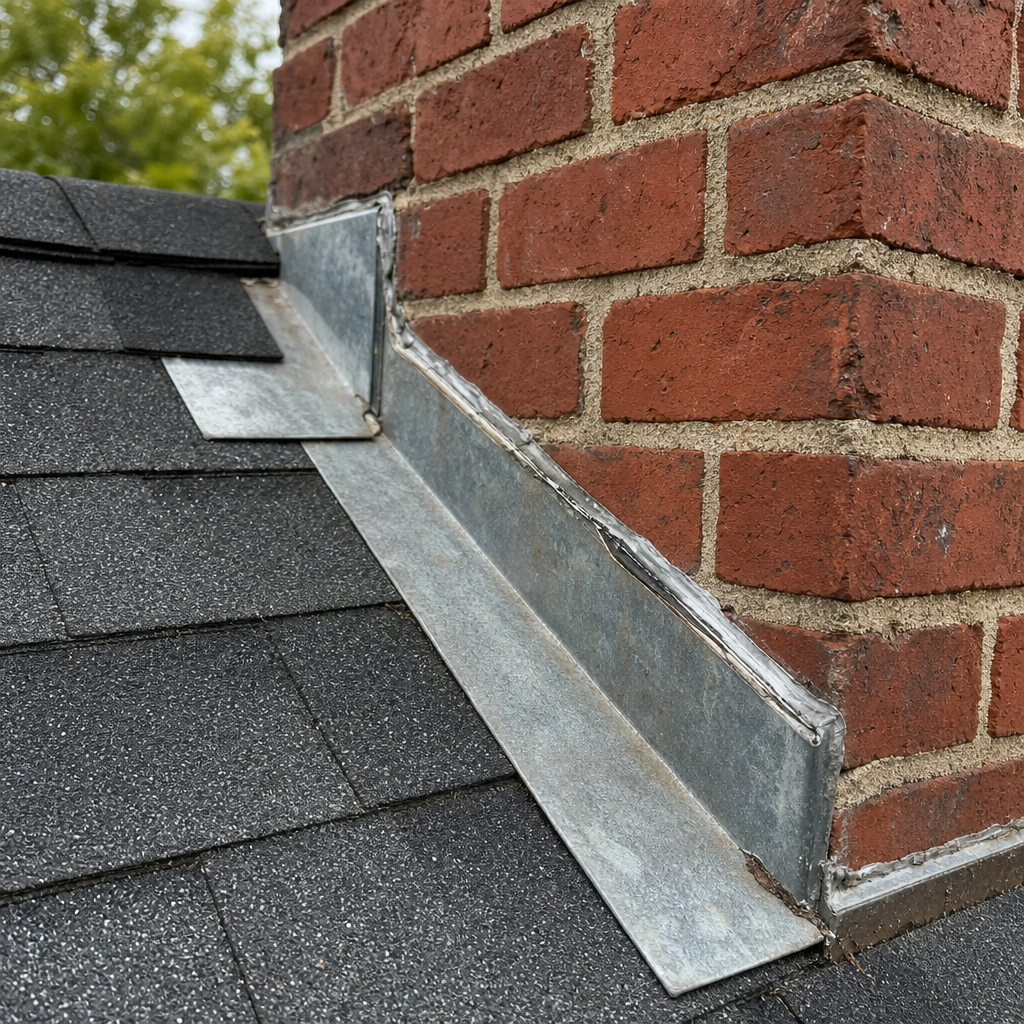
Roof flashing, north side
Roof
I’m the Product Designer at Domis, a home maintenance platform that helps people understand their house and take care of it without the busywork getting in the way.
What is Domis
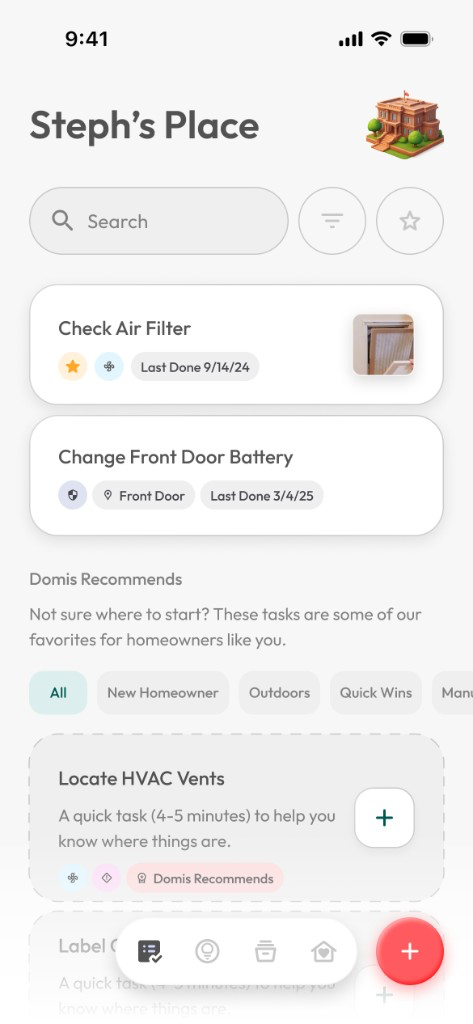
Domis helps homeowners keep track of their homes. What needs fixing, what’s about to break, and what that appliance in the garage actually is.
Most services in this category try to take home care out of the owner’s hands. Domis does the opposite. It sits between the owner and the house as a compatibility layer, helping them track it, understand it, and prevent the failures that get expensive.
My role
I joined as the Founding Product Designer and work on 0→1 design across mobile and web.
My responsibilities
User problem
Before designing features, I needed to understand how homeowners actually hold knowledge about their houses, and where that knowledge breaks down. Domis has to meet people in that messy middle, not ask them to become facility managers overnight.
Most Domis users. Years in, still reconstructing the house under stress.
| Dimension | Quiet period | Something breaks | Digging for records | Talking to a pro | Temporary fix | Back to baseline |
|---|---|---|---|---|---|---|
| Actions | Ignores systems until a symptom | Needs age, model, prior work | Searches old PDFs, photos, texts | Rebuilds the story from scraps | Pays for a patch / replacement | New facts live in the invoice thread |
| Thoughts | “It’s been fine for years.” | “Did we already fix this once?” | “Is the warranty still good?” | “I know I have this somewhere.” | “Just get it working.” | “I’ll track this better next time.” |
| Emotions | Complacent | Anxious | Frustrated | Frustrated. Info is everywhere | Relieved, spent | Resigned drift |
| Touchpoints | None / vague memory | Appliance, prior invoices | Email, Drive, camera roll | Pro call / group texts | Receipt, warranty email | Same scattered tools |
| Pain | No living home record | History is incomplete | Files are stale or missing | Can’t brief a pro cleanly | Learning stays with the vendor | Cycle repeats next season |
| Opportunity | Surface what’s already known | Capture identity under urgency | One place for home facts | Hand pros a coherent brief | Log the outcome on the home | Break the forget-repeat loop |
Key challenge
Domis only works if it knows your home, but listing every space, appliance, and nuance by hand is painful.
When people tried to set up a home profile, many realized they didn’t know their own homes. Setting up Domis also became the act of learning it.
Domis works best with
Owner knows
So to make setup feel as rewarding and informative as possible, I designed Domis around one principle:
Extract the maximum value from the smallest action the user is willing to take.
The home, known
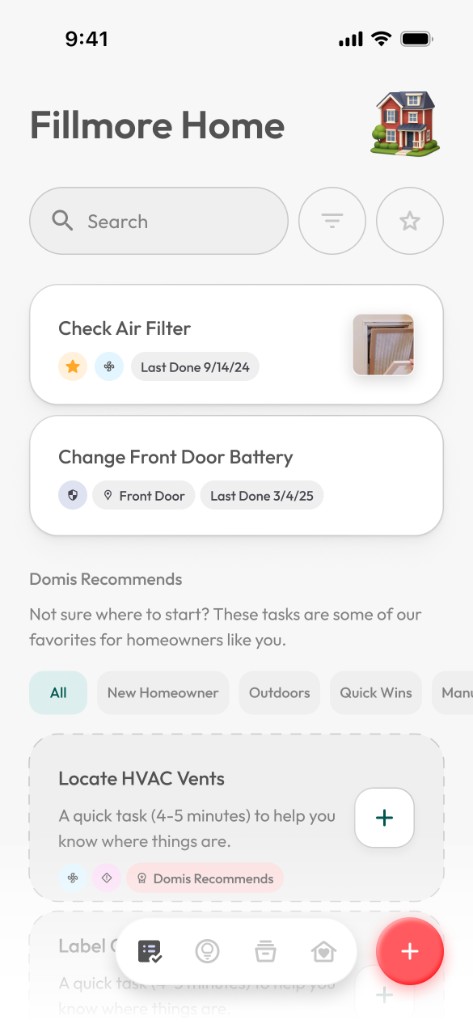
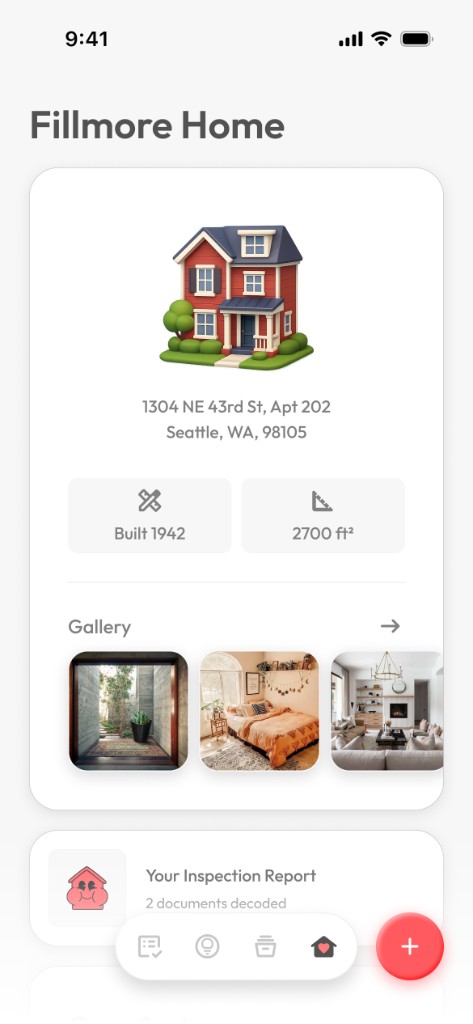
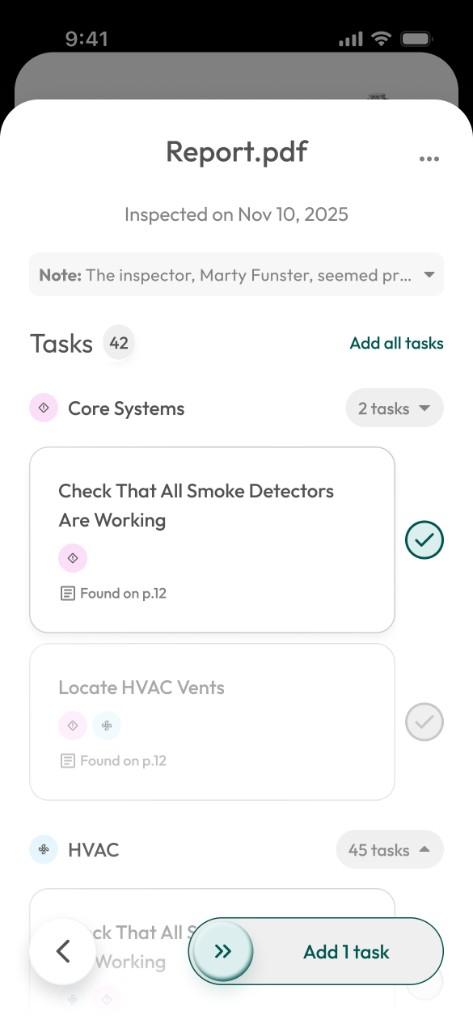
This is what an owner who understands their house looks like in software. A filled property. Tasks tracked with tagged appliances. Tasks pulled from the report.
Address Intelligence
2140 Fillmore St, San Francisco, CA

Fillmore Home
2140 Fillmore St, San Francisco, CA
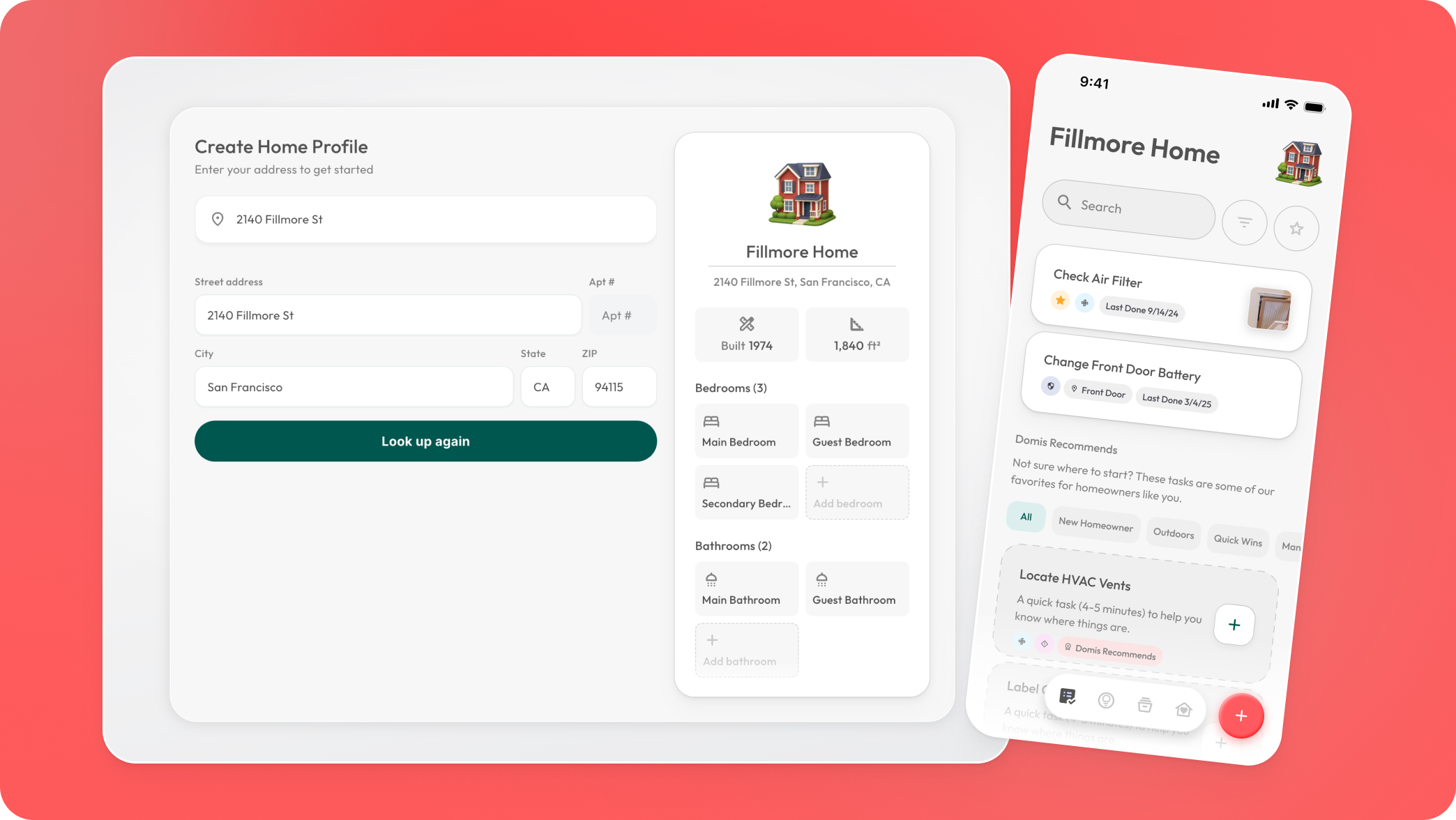
The first thing anyone does in Domis is type their address. That is the entire ask — about as much as a new user will give.
So I designed address intelligence around that single input: type an address once, and Domis researches the house and fills the form the owner would have completed by hand.

The challenge
The hard part is not finding data. It is deciding what the owner should see when search is unsure. The same address can return different facts on different runs.
Rather than forcing a confident answer, Domis does 3 searches, cross references them, and only shows what sources agree on, leaves blanks when they do not, and never locks the owner out of a field.
Create Home Profile
Enter your address to get started
Enter address manually

Confirm your address to build this home profile
Address Intelligence also pulls photos of the property and generates a clean icon for it. Small thing, but a recognizable avatar matters when someone manages more than one property, and it is replaceable if they would rather use their own.
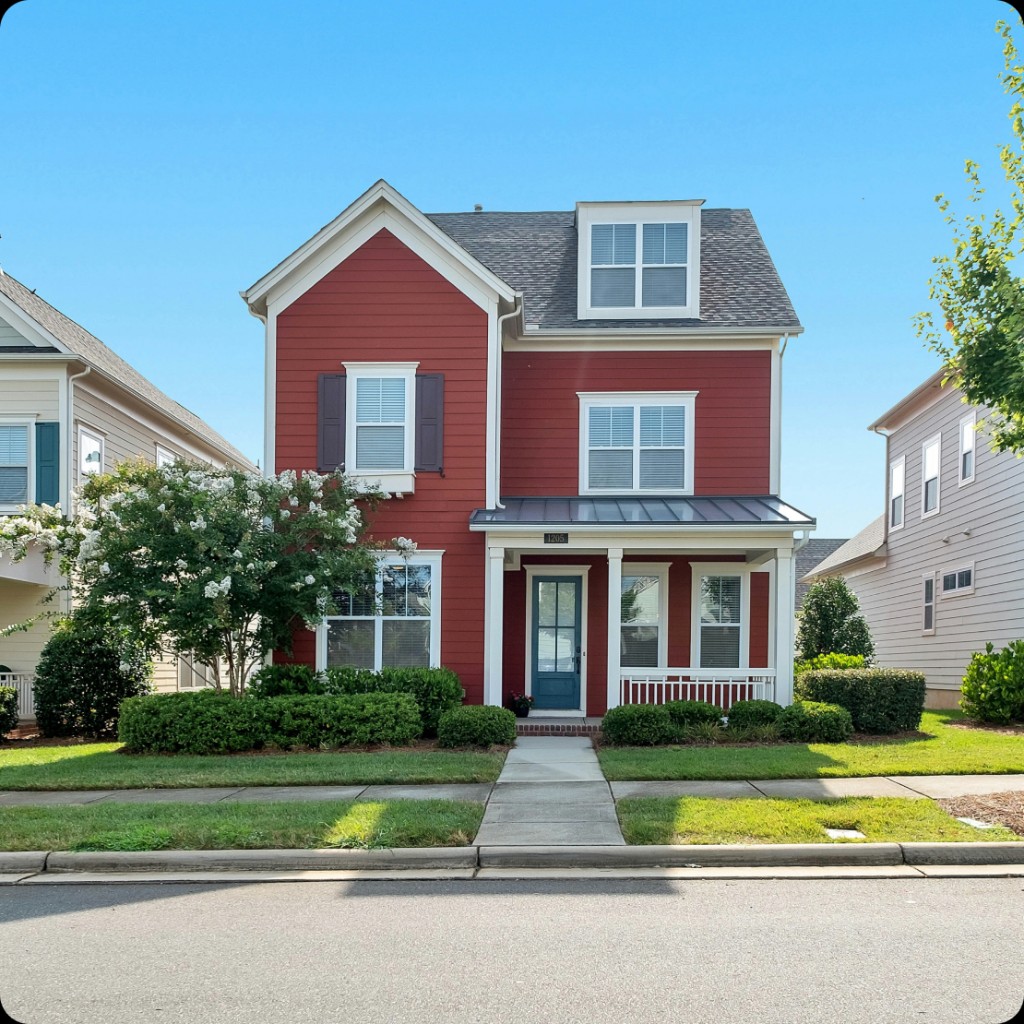
What street view gives you
Fillmore Home
2140 Fillmore St, San Francisco, CA
What Domis makes of it

Marina Home

Valencia Home

Noe Home

Pacific Home
Fillmore Home

Dolores Home

Castro Home

Hayes Home

Mission Home
Appliance Intelligence
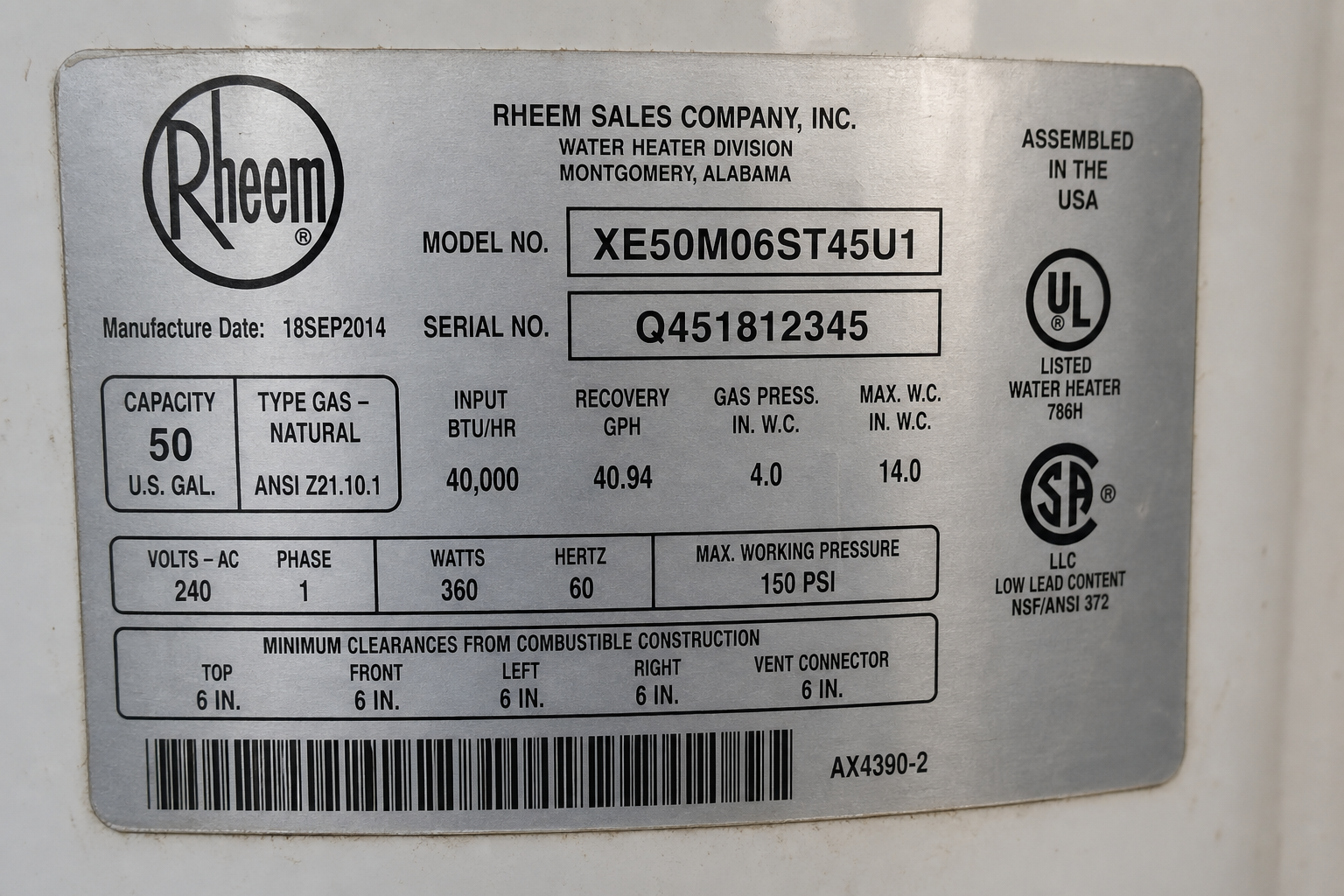
Appliance label
Rheem Water heater
XE50M06ST45U1
Logging your appliances is one of the first useful things to do in Domis, since it lets them be tagged in tasks and in conversations with Pros.
Walking around photographing them turns out to be mildly satisfying. Typing in the model number and other minute details does not.
The model number was not the user goal. It was a key to the things owners actually need later: manuals, warranty, support, parts, and common failures.
I asked my Google Gemini app about appliance labels to see what it could give me.
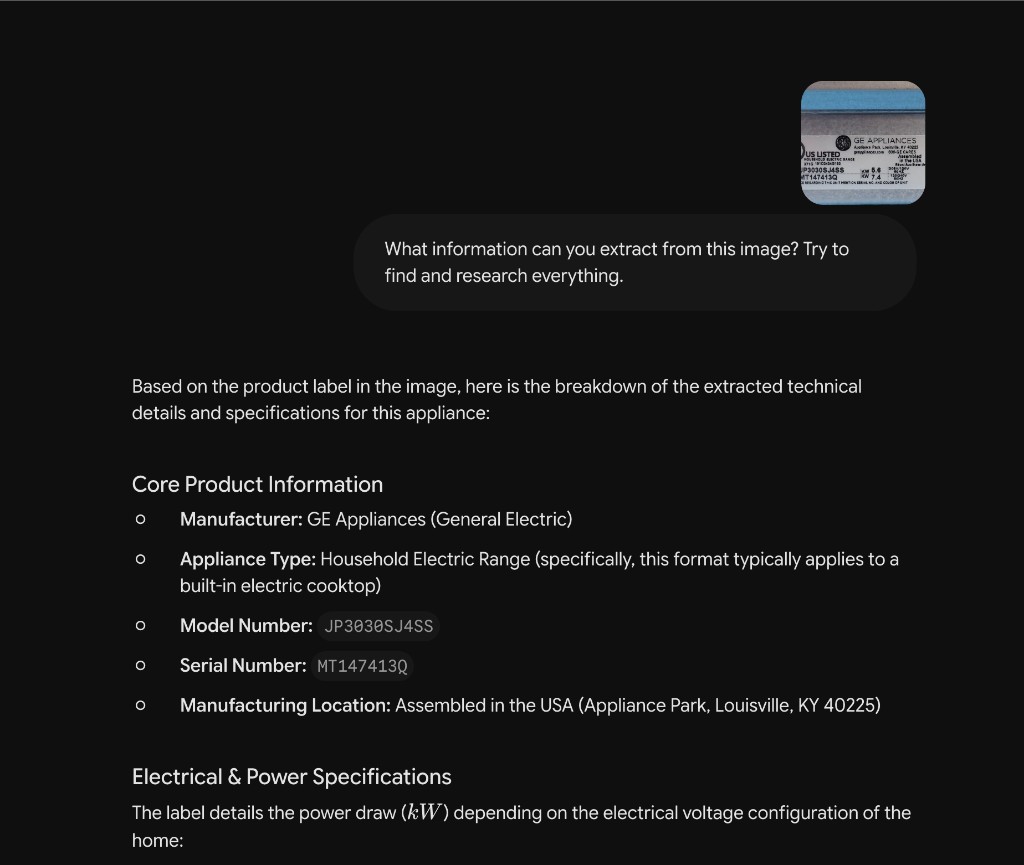
With the Gemini test as proof of concept, I moved on to designing the feature.

The user gives
Domis returns
Add a photo and we’ll fill the details for you!
Category
Notes
Add a note to help you remember the little and not so little things along the way.
Space
Associated Item
Additional Details
Appliance:
Water heater
Brand:
Rheem
Model:
XE50M06ST45U1
Serial:
Q451812345
Installed
Add
V1 stopped at reading the plate. For v2 I pushed the same scan further: support pages, warranty links, the things an owner actually needs when something breaks.
Brand:
Rheem
Model:
XE50M06ST
Serial:
Q451812345
Capacity:
50 gal
Common failures: thermocouple, anode rod, pilot assembly
Report Processor
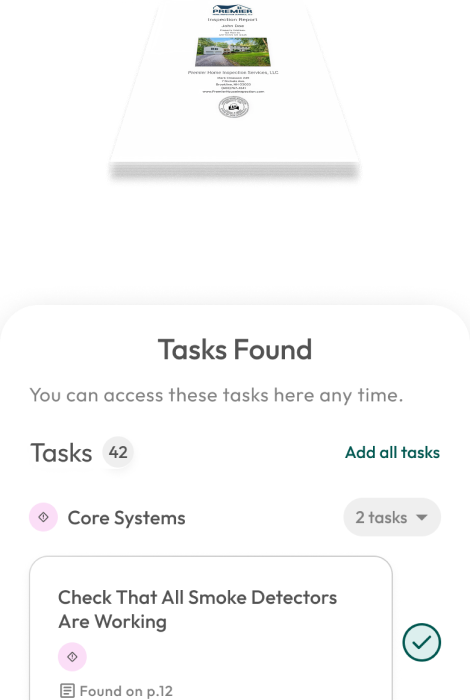
A key part of my research was around meeting the user where they were, and I went looking for what information homeowners already possess.
Every homeowner has an inspection report. It is also long, repetitive, and almost entirely unread.
However, no one cares about the inspection report. Our interviews explained why. People had been in their homes long enough that the report no longer described the house they were living in.
Affinity diagram
Why owners ignore the inspection report
That changed what the feature should be. Not a diagnostic that generates a to-do list, which would be wrong on arrival, but a way to understand the house.
The user gives
inspection.pdf
64 pages
Domis returns
Roof flashing, north side
Water heater, age
Kitchen GFCI outlets
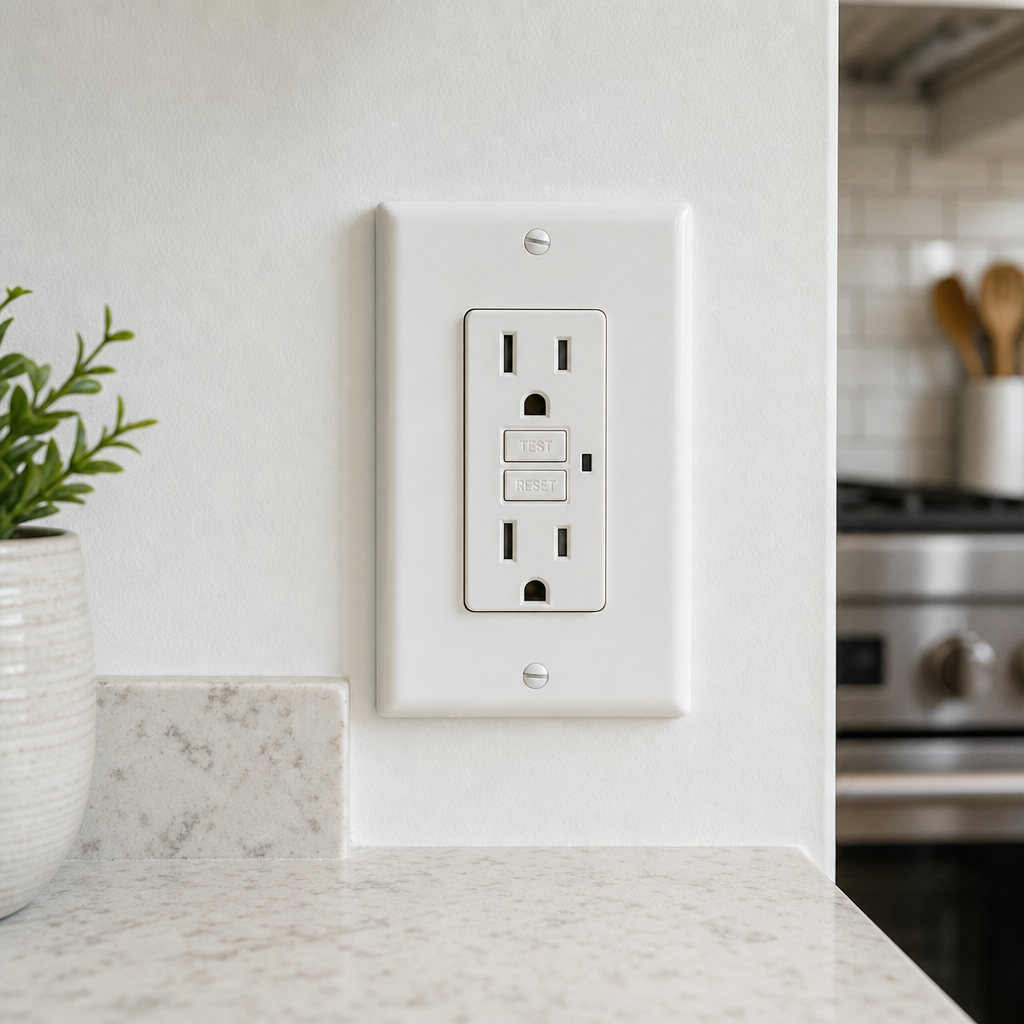
Pull any of these into tasks. Or don't.
Insights
Systems. AI output and human input share the same editable forms. Mobile and web sit on one design system I own. Different ingestion paths share one contract: fill what you can, never lock the owner out.
Trust. AI is wrong sometimes. We show disagreement instead of a confident wrong answer, and treat the report as understanding, not an automatic chore list.
Collaboration. As founding PD I set phases with leadership and eng: what ships when, and what the AI is allowed to claim. I define and prototype the AI surfaces; engineering owns the pipeline under that contract.
And more!
Domis is recently launched and rapidly updating.
The lens has not changed. Find the smallest thing the user is willing to do, and return as much as possible for it.